


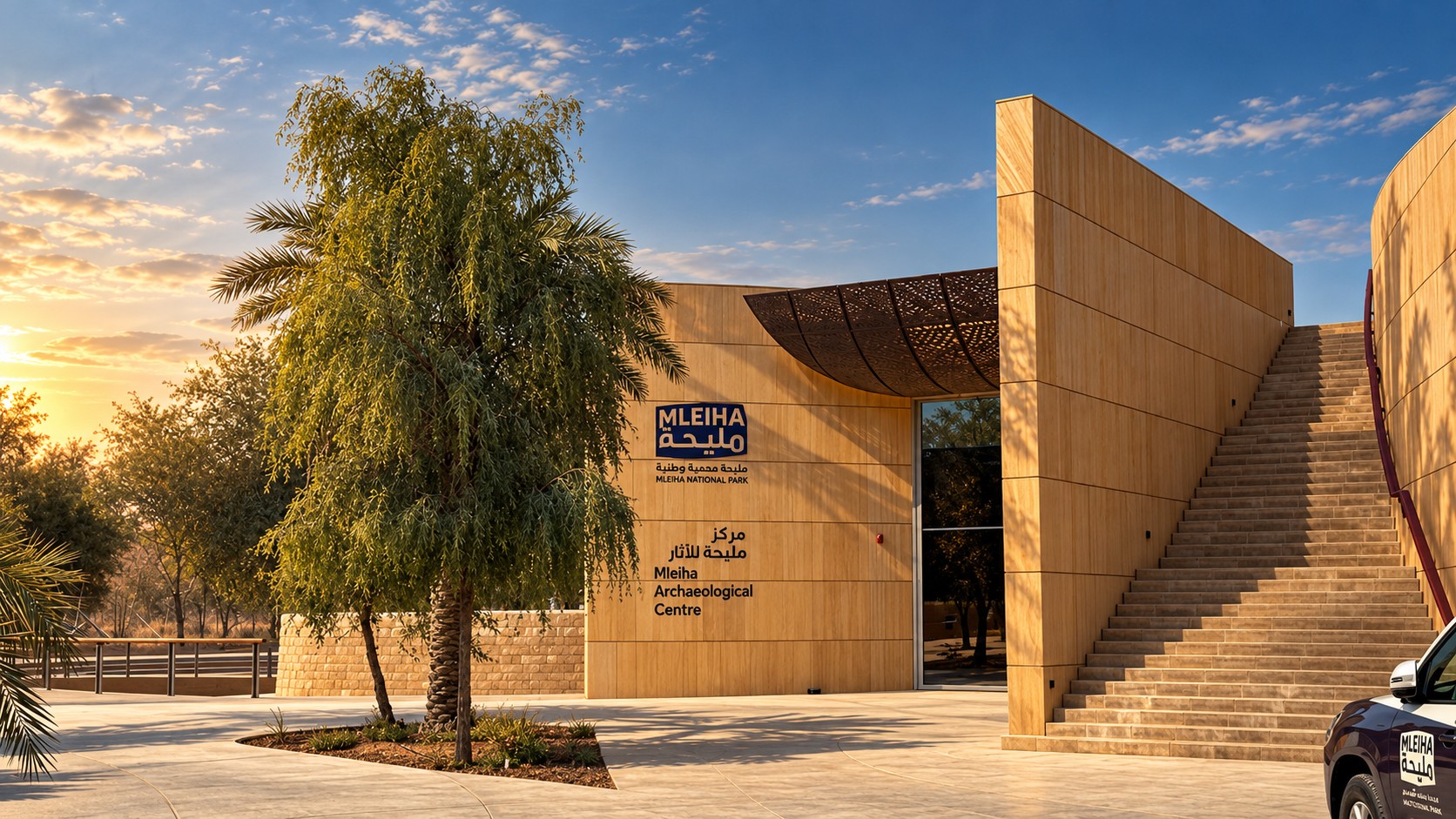
Mleiha National Park has received the Sustain Sharjah Award in the Destinations category at the Sharjah International Travel and Tourism Forum, recognising its commitment to responsible tourism and protecting Sharjah’s natural and cultural heritage.
The achievement reflects the park’s practical approach to sustainability, combining solar-powered infrastructure, measures to reduce single-use plastics and educational experiences that encourage visitors to engage responsibly with the desert landscape.
Solar energy supports the park’s glamping operations, including accommodation, office spaces, lighting and water pumps, while its surveillance cameras are fully solar-powered. Non-permanent guest accommodation helps limit the impact of development, alongside designated vehicle routes and managed access to reduce disturbance to the surrounding environment.
The park is also reducing its reliance on conventional single-use plastic bottles and disposable cutlery through alternative materials, water refill stations and reusable bottles provided to staff.
Omar Jasim Al Ali, Manager of Mleiha, said: “This recognition reflects our commitment to making sustainability part of how Mleiha operates and how visitors experience it. From solar-powered facilities and reducing single-use plastics to managing access and integrating environmental awareness into our programmes, our focus is on practical actions that support the protection of this landscape. We will continue strengthening these efforts through monitoring, education and collaboration, ensuring that tourism contributes to preserving Mleiha’s natural and cultural heritage.”
Sustainability awareness is integrated into the park’s interpretive tours and educational workshops, connecting archaeology, ecology, geology and astronomy with the importance of conservation. These experiences help visitors understand Mleiha’s significance within the Faya Palaeolandscape, a UNESCO World Heritage Site, and their role in safeguarding it.
Building on these practices, the park plans to strengthen environmental monitoring through ecological surveys and the establishment of energy, water, waste and carbon baselines. This work will help guide future conservation measures and resource-efficiency improvements, supporting a more informed and accountable approach to sustainable tourism.