


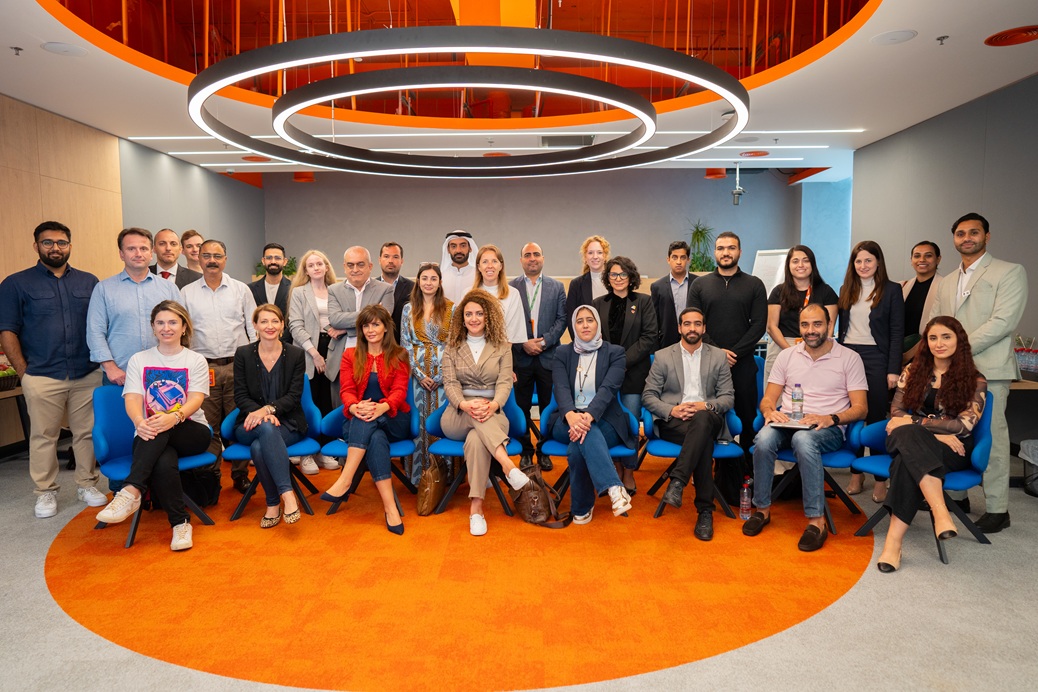
Road2.0, the action-first initiative powered by the UAE Alliance for Climate Action (UACA), launched its Year One Report: Accelerating Commercial EV Uptake in the UAE. The report presents the UAE’s first evidence-based assessment of commercial electric vehicle (EV) feasibility, highlighting barriers as well as practical enablers to scale decarbonization. Findings are grounded in real-world pilots across multiple vehicle types – from vans and heavy-duty trucks to sedans and two-wheelers for last-mile delivery.
UACA, convened by Emirates Nature-WWF, endorsed by the Ministry of Climate Change and Environment (MOCCAE) and supported by HSBC as its founding donor, launched Road2.0 at COP28 to address the limited supply and demand for commercial EVs in the UAE. Road2.0 is endorsed by the UAE Ministry of Energy and Infrastructure (MOEI), and sponsored by talabat and Unilever. Road2.0 currently unites 19 corporate signatories operating more than 20,000 commercial vehicles nationwide.
In Year One, Road2.0 Signatories:
- Successfully completed EV pilots within their fleets: In less than a year, 17leading companies moved from a near-zero baseline to deploying 90 EVs across their fleets. These pilots demonstrated technical and operational viability, proving that EVs can perform reliably in high temperatures and across diverse logistics needs. However, scaling requires ecosystem-wide support.
- Identified barriers and enablers: Insights were categorized under three levers – increasing supply and demand of EVs, expanding charging infrastructure for the private sector, and resolving operational hurdles. Signatories also flagged the current Total Cost of Ownership gap between internal combustion engine (ICE) vehicles and EVs, which is driven by high upfront costs, limited leasing options and insufficient resale markets and secondary market demand, highlighting the need for longer and more innovative leasing terms, stronger secondary markets, and targeted policy support. Further work is underway to assess the Total Cost of Ownership gap using pilot data from Signatories.
- Mapped charging requirements: For the first time, UAE companies worked together to jointly mappriority charging hubs, calling for greater capacity and coverage across public charging networks. Dubai South, Jebel Ali, and Dubai Investment Park were identified as critical hotspots where investment could deliver maximum impact in the short term.
- Pooled demand for higher impact:0 Signatories also issued the Declaration to EV Ecosystem Players, signalling intent to deploy 6,000 commercial EVs by 2030 and 20,000 by 2040, with potential emissions savings of over 100,000 tonnes of CO2e. This reflects the collective commitment to electrify 30% of commercial fleets by 2030 and achieve 100% zero-emission vehicles by 2040.
By demonstrating feasibility and identifying the conditions required for scale, Road2.0 shows how corporate climate leadership can catalyze system-wide decarbonization across transport, logistics, and supply chains – in alignment with the UAE Net Zero by 2050 Strategy.
H.E. Eng Sharif Al Olama, Undersecretary for Energy and Petroleum Affairs, Ministry of Energy and Infrastructure commented: “The UAE’s private sector is pioneering the transition to commercial electric vehicles, tackling a sector that contributes around 10% of national emissions. UACA’s Road2.0 is an important platform to accelerate the decarbonization of commercial fleets, complementing the National Electric Vehicles Policy under which the UAE aims for EVs to comprise 50% of all vehicles by 2050. Together with partners across industry, we are building the infrastructure, policies, and market to scale commercial EVs – reinforcing the UAE’s position as a regional leader in green mobility.”
Laila Mostafa Abdullatif, Director General, Emirates Nature-WWF commented:“The launch of the Road2.0 Year One Report under the UAE Alliance for Climate Action (UACA) is a milestone moment for the UAE’s transition to net zero. With an action-first, bottom-up approach, Road2.0 Signatories have proven that commercial EVs are viable in the UAE today – from two-wheelers to heavy-duty trucks – and have shown how the private sector can catalyze system-wide decarbonization. This report gives policymakers, investors, and businesses a practical playbook to scale the uptake of commercial EV fleets. We now invite more organizations to join UACA and Road2.0 to strengthen their decarbonization journeys.”
Current Road2.0 Signatories include: Advanced Media Trading, Aramex, Arla, Chalhoub Group, Ehfaaz, Enviroserve, Farnek, Kibsons, Landmark Group, Majid Al Futtaim, Mars, Nestlé, Positive Zero, RNZ Group, Schneider Electric, Transmed, Unilever and Yes Full Circle Solutions.
To explore the full findings and recommendations, read the Year One Report here
The time to lead is now – join UACA’s Road2.0 and to pioneer the UAE’s journey to zero-emission transport and shape the future of green mobility.