


What if I told you that the most aggressive expansion in the global energy sector right now isn’t happening in the US or China—but in the United Arab Emirates?
Strange, right? Because for decades, the UAE was synonymous with oil wealth. Think of Abu Dhabi’s towering skyline or Dubai’s fleet of luxury supercars. Oil made that possible. But today, something different is fueling the country’s vision.
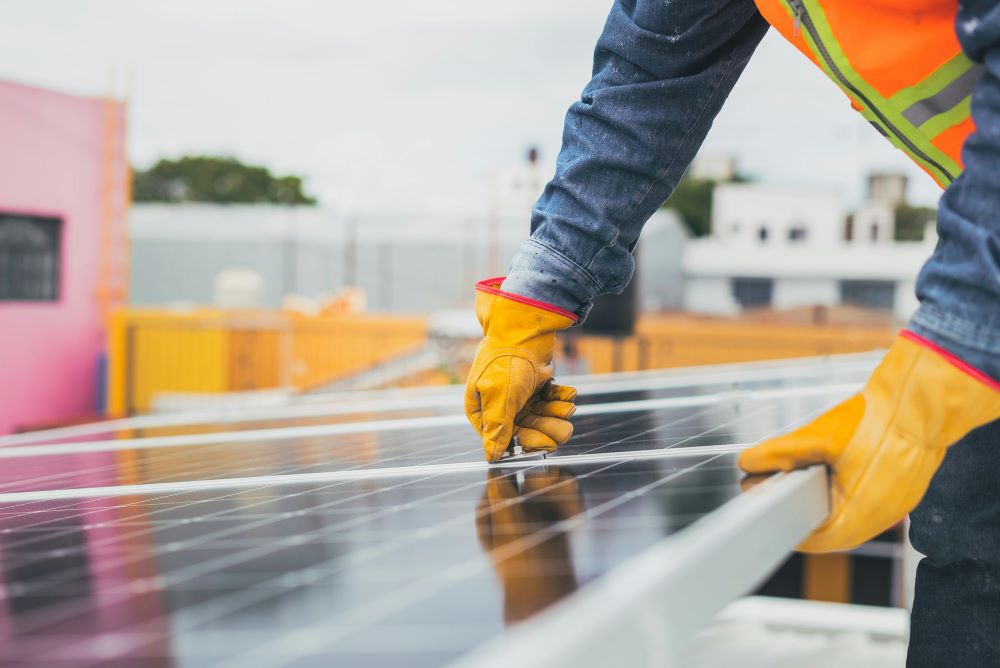
The UAE isn’t just researching renewable energy. It’s building solar megaprojects, nuclear plants, and wind farms faster than most nations can draft the blueprint. In the United Arab Emirates, electricity generation in the Energy market is projected to reach 238.05bn kWh in 2025. And behind that growth, there’s a massive hiring wave. From skilled engineers to laborers, from scientists to logistics workers—energy jobs in the UAE are becoming one of the biggest magnets for local and international talent.
Let’s break down how this transformation unfolded, what it means for global job seekers, and why the UAE’s energy industry might just be the best place to look if you’re planning your next move.
From Oil to Everything: The UAE’s Multi-Stream Energy Strategy
The UAE didn’t ditch oil. It doubled down on energy across every possible source.
Yes, the country still ranks among the top 10 global oil producers. But here’s what’s new: it’s simultaneously emerging as a renewable energy powerhouse. The proof is in the output.
- The Barakah Nuclear Energy Plant began commercial operations in 2021 and is expected to supply up to 25% of the UAE’s electricity needs once fully operational.
- The Mohammed bin Rashid Al Maktoum Solar Park is set to hit 5,000 MW capacity by 2030. For context, that’s enough to power over 1.3 million homes.
- Masdar, the UAE’s clean energy company, has invested in over 40 countries and currently boasts a renewable energy portfolio of over 20 GW.
According to Gartner, countries that blend oil profits with renewable reinvestment grow their overall energy output capacity 40% faster than those focused on a single resource stream.
This isn’t about transition—it’s about expansion. The UAE isn’t choosing between oil and renewables. It’s taking both.
Why the UAE Energy Job Market Is Heating Up
When a country builds this much, this fast, it needs people. Lots of them.
The UAE’s energy sector is now one of the fastest-growing job markets in the world. And it’s not just oil engineers or solar panel techs. It’s transport coordinators, civil engineers, geologists, environmental scientists, electricians, safety officers, and even drone operators.
Let’s make that real:
- The Sharjah National Oil Corporation recently opened over 2,000 new positions for its 2025 expansion project.
- Masdar is currently hiring for more than 300 roles tied to overseas green energy partnerships.
- The Dubai Electricity and Water Authority (DEWA) plans to increase staff capacity by 40% by 2026.
According to a Gartner Talent and Energy 2025 Outlook, the MENA region is projected to require over 1.1 million new energy workers by the end of 2027. The UAE alone will account for at least 320,000 of those roles.
That growth is why job seekers, both qualified and unqualified, are eyeing the Emirates.
The UAE Wants Both Experts and Starters
This isn’t a closed-door industry. The UAE’s strategy is open-source. If you have skills, you’ll find a home. If you don’t, they’ll still find room.
The government and private sector are actively:
- Recruiting international engineers, project managers, and scientific researchers from Europe, Southeast Asia, and North America.
- Training locals through accelerated energy programs in institutions like Khalifa University.
- Creating upskilling and reskilling tracks for general laborers to work on solar farms or pipeline construction.
One key example is the ADNOC Technical Academy, which trains over 1,500 technicians annually and has now opened its doors to foreign nationals under a new vocational visa scheme.
The goal is clear: fill every role fast. Whether you’re a seasoned oil rig veteran or someone looking for your first entry into energy, the UAE is hiring.
And for job seekers wanting to break into this space—or just track what’s available—resources like https://blog.energyjobsearch.com/ are starting to dominate Google searches. The blog covers everything from new openings to country-specific visa changes and insider tips from current workers in the field.
Research + Infrastructure = Speed
There’s a reason the UAE can build what takes others decades.
In the last ten years, the country has poured billions into research and development. Between 2020 and 2023, R&D spending on renewable energy infrastructure grew by 47%, according to the UAE Ministry of Energy data. They’ve partnered with institutions like MIT, established science cities, and built out innovation zones like Masdar City in Abu Dhabi.
This constant flow of capital into research has allowed the country to develop homegrown expertise. It also shortened the time between “planning” and “executing.”
For example:
- It took just 36 months to bring Barakah’s first reactor online after initial groundwork—an unprecedented timeline in nuclear energy development.
- Dubai’s Green Hydrogen project, the first in the Middle East, went from concept to operational status in under two years.
Gartner’s 2024 global energy report ranks the UAE as the second fastest country in energy infrastructure project delivery, just behind South Korea.
In energy, speed isn’t just about growth—it’s about grabbing market share before your competitors do. The UAE gets that.
What This Means for the Region and the World
The UAE’s fast-track energy strategy isn’t just a win for its economy. It’s shaping regional dynamics.
Saudi Arabia is following suit with its Vision 2030. Egypt is now rapidly expanding its own solar capacity. And Jordan has launched cross-border grid partnerships, hoping to feed excess power into the Gulf.
But the UAE is still ahead—because it started first and moved faster.
And here’s the hidden upside for international professionals: wages in the UAE energy sector are still among the highest globally. Tax-free earnings, stable contracts, and rapid growth opportunities make it one of the most attractive energy labor markets in the world.
Gartner’s 2025 Workforce Satisfaction Index reported that 71% of expatriate energy professionals in the UAE rated their job conditions as “excellent,” up from 52% just five years ago.
Tech Is the New Backbone of the UAE’s Energy Workforce
Energy in the UAE isn’t just about machines, pipelines, and solar panels anymore. It’s also about data, automation, and digital control. As projects scale, so does the demand for technology-first solutions.
Real-time monitoring of wind farms? That’s handled by AI-powered sensors. Predictive maintenance for gas pipelines? Machine learning models do that now. And drone inspections of solar farms in the desert? That’s become a routine task.
This means a whole new category of workers is entering the energy conversation:
- Data analysts are being hired to monitor consumption patterns and optimize production timelines.
- Software engineers are building internal tools to improve energy distribution efficiency.
- Cybersecurity experts are protecting national energy infrastructure from threats.
A 2025 Gartner Tech in Energy Report found that 68% of energy companies in the Gulf region plan to increase investment in digital transformation within 12 months. This includes upskilling staff and hiring tech specialists from non-energy backgrounds.
In the UAE, this shift is opening doors for people who previously wouldn’t have considered a career in energy. A backend developer in Berlin could now be managing grid analytics in Abu Dhabi. A drone pilot from Mumbai could be inspecting turbines near Al Dhafra.
The message is clear: the UAE isn’t just building an energy workforce. It’s building a digital energy ecosystem. And it’s open for talent—wherever it comes from.
Wrapping up
The UAE didn’t stumble into this position. It was planned, funded, hired, and executed. The UAE is, today, leading on sustainable energy by leaps and bounds.
What’s happening in the Emirates right now is a masterclass in energy sector diversification. It’s built on oil, but it’s accelerating into the future with solar, wind, hydrogen, and nuclear.
More importantly, it’s building an industry that people want to be part of.
Energy isn’t just about power anymore. It’s about people. And the UAE is making sure there’s room for everyone—from global veterans to first-time workers. If you’re considering a move, now is the time to look east. The jobs are there. The momentum is real.