


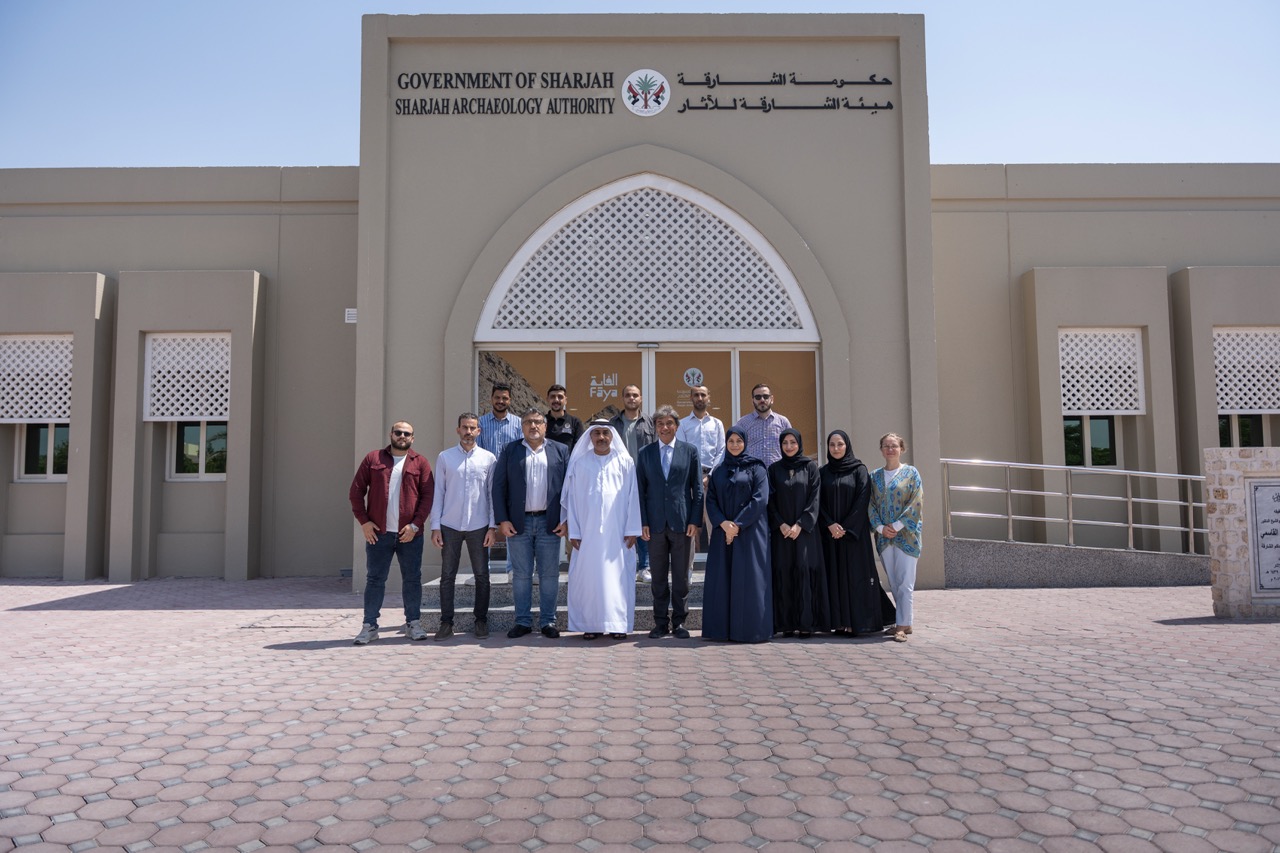
The World Heritage Office at the Sharjah Archaeology Authority (SAA) has strengthened Sharjah’s long-term strategy for conserving its historic buildings through a specialised workshop designed to enhance the technical and professional capabilities of engineers, conservation specialists and heritage professionals responsible for restoration work across the emirate.
Held from September 22 to 24 at the Authority’s headquarters in Halwan, the “Restoration of Historic Buildings” workshop brought together specialists from SAA, Department Of Public Works, Authority for Initiatives Implementation (Mubadara) and partner entities to develop a shared understanding of the international standards, methodologies and decision-making processes that guide the conservation of historic buildings and sites.
Using the historic Sharjah Air Station building (Al Mahatta) as a case study, participants examined the guiding principles for selecting and applying restoration methodologies, given the building’s significance as a unique part of Sharjah’s historical heritage, which the emirate is committed to safeguarding.
The workshop was moderated by Dr. Alaa Al-Habashi, a renowned conservation, restoration and World Heritage expert, alongside experts from the World Heritage Office at SAA. It forms part of the office’s wider strategy to strengthen specialised knowledge, improve coordination among the entities responsible for heritage conservation, and establish a shared professional framework that supports better conservation decisions while safeguarding the authenticity, integrity values and attributes of Sharjah’s historic buildings over the long term.
Building a shared framework for cultural conservation
A central focus of the workshop’s programme was the importance of grounding restoration decisions in rigorous historical research and detailed structural analysis before any physical intervention takes place.
The workshop explored how historic buildings that remain in active use can continue to meet contemporary functional requirements without compromising their heritage values or the character of the surrounding urban environment.
The workshop further highlighted international conservation charters, aspects of authenticity, heritage values and methods of communicating these values, as well as their application in state of conservation reports and cultural heritage site management plans.
H.E. Eisa Yousif, Director-General of the Sharjah Archaeology Authority, said: “Conserving historic buildings extends far beyond addressing their structural condition. Every intervention begins with understanding what gives a site its heritage value and applying internationally recognised standards in ways that respect its unique character. Building national expertise across the institutions responsible for heritage conservation creates a shared professional approach, strengthens coordination and ensures that restoration and conservation decisions continue to protect the authenticity, values and attributes of Sharjah’s historic buildings for future generations.”
He added: “This workshop represents another step towards embedding specialised conservation knowledge within institutional practice among the entities responsible for preserving cultural heritage in Sharjah. By creating a common understanding of the principles that guide interventions at historic sites, we strengthen both the quality of conservation decisions and our collective ability to manage heritage places responsibly over the long term.”
From restoration to long-term management
The second day focused on approaches to restoring and rehabilitating historic buildings, including completion, replacement and addition techniques, structural reinforcement and the integration of modern infrastructure while preserving heritage values.
The programme concluded by examining the long-term management requirements of historic buildings, including maintenance strategies and the proposed use of Heritage Building Information Modelling (HBIM) to support the documentation, monitoring and management of building elements and heritage attributes.
The workshop concluded with a series of recommendations aimed at strengthening cooperation and coordination among the entities responsible for conserving and managing Sharjah’s historic buildings.
Supporting World Heritage stewardship
The World Heritage Office was established to develop and manage nomination files for sites of Outstanding Universal Value across the emirate while overseeing the protection, conservation and long-term management of sites inscribed on UNESCO’s World Heritage List and the Tentative List.
The office also works closely with UNESCO World Heritage Center and specialised international organisations to exchange expertise, build professional capacity and deliver programmes that promote awareness of the importance of World Heritage.
In coordination with the Scientific Committee for the Faya World Heritage Property, the office oversees the Government of Sharjah’s AED 2 million Faya Research Grant Programme, supporting international scientific collaboration and archaeological research at one of the world’s most significant prehistoric landscapes.