


For much of the last decade, a green building certificate has been treated as the finish line for sustainable development in the UAE. A project reached its target Pearl rating, or hit its LEED tier, and the story largely ended there, filed away as a marketing point at handover. That story is changing. As buyers, regulators, insurers and environmental groups ask harder questions about long-term performance, UAE developers are increasingly moving past the one-time badge and building systems that track environmental impact continuously, long after the ribbon has been cut.
For readers who follow sustainability closely, this shift matters more than the rating systems themselves. It signals a move from static compliance toward something closer to ongoing environmental accountability, backed by data rather than a plaque in the lobby.
Certification Was Never Meant to Be the Whole Picture
Abu Dhabi’s Estidama framework, built around the Pearl Rating System, remains the emirate’s baseline sustainability requirement. Every new development must reach at least a 1 Pearl rating, and government-funded projects must reach 2 Pearls, across three separate tracks covering buildings, villas and entire communities. The system formally recognises four stages, following a project from planning and design through construction and into operation, addressing environmental, economic, social and cultural criteria along the way.
In practice, though, most developments are assessed and marketed on the strength of their design and construction-stage credentials alone. Far fewer carry that same rigour into ongoing operational monitoring once residents actually move in, which is precisely where a building’s real environmental footprint, its water use, energy draw and waste output, gets locked in. International frameworks such as LEED face a comparable limitation: they describe what a building was designed and built to do, not necessarily what it continues to do over the following ten or twenty years of occupancy.
That gap between design intent and lived performance is where a newer layer of environmental accountability has started to take shape across the UAE property sector.
From a One-Time Badge to Continuous Data
Three practices, in particular, are becoming more common among developers who want to back sustainability claims with something more durable than a certificate.
Remote biodiversity monitoring is the most visible. Coastal and wetland developments increasingly rely on drone surveys and satellite remote sensing to track ecosystem health over time, rather than depending on a single environmental impact assessment filed away years earlier. The Environment Agency – Abu Dhabi, for example, has partnered with environmental technology firms to map and monitor tens of thousands of hectares of mangrove forest using drone-based imaging, producing a dataset that is updated on an ongoing basis rather than a snapshot that quietly ages out of relevance.
Blue carbon accounting is close behind. Mangroves, seagrass and salt marsh sequester carbon at a rate several times higher than an equivalent area of terrestrial forest, which has turned coastal ecosystems into a measurable climate asset rather than a scenic backdrop. Developers with mangrove or wetland frontage are increasingly commissioning carbon stock assessments and ongoing sequestration monitoring, feeding into the UAE’s wider blue carbon strategy and its Net Zero by 2050 commitments.
Post-occupancy performance data is the least common but arguably most telling. A small but growing number of developments now meter actual water and energy consumption against original design targets, instead of treating those targets as a one-off design assumption that is never revisited. This is where the gap between "designed to be efficient" and "operating efficiently" becomes visible, and where operational-stage Pearl or LEED recertification, still relatively rare in the region, starts to matter more than the original design-stage rating.
Structured ESG disclosure rounds out the picture. Larger UAE developers are increasingly publishing sustainability reports aligned with international frameworks such as the GRI, alongside the emirate-level Estidama requirements, covering emissions, water use and biodiversity commitments on a recurring annual basis rather than a single project-launch statement. That shift matters because it forces environmental claims to be revisited and updated publicly, year on year, rather than left to stand unchanged from the day a certificate was issued.
Together, these practices push environmental performance from something certified once at handover to something disclosed and re-measured on an ongoing basis, closer to how financial or safety performance is already reported to stakeholders.
What This Looks Like on the Ground
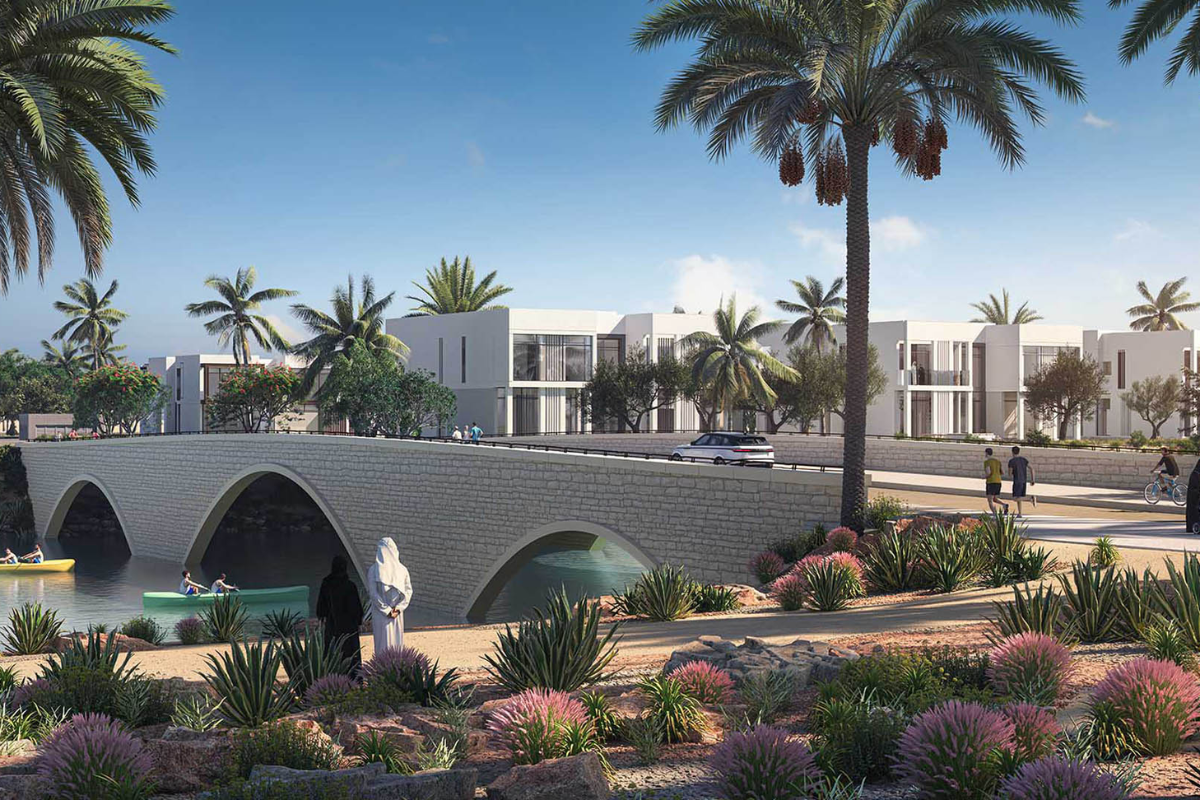
Jubail Island, a residential community on Abu Dhabi’s coast developed by LEAD Development, is a useful illustration of how this shift plays out in a live project rather than a policy paper. The island sits within a protected natural environment shaped by mangrove forest, salt marsh and seagrass meadow, and its developer has structured a formal partnership with the Environment Agency – Abu Dhabi to manage that ecosystem rather than simply preserve it on paper and move on.
That partnership includes the Jubail Mangrove Innovation Centre, a dedicated research and restoration hub built into the island itself, where field surveys, habitat monitoring and community education programmes run continuously rather than as a one-time environmental assessment ticked off before construction began. Wildlife on the island, including migratory bird populations and resident gazelle, is tracked as part of that ongoing work, alongside monitoring of the wetland and marsh habitats that support them.
The residential side of the development sits inside that same framework rather than simply beside it. Buyers exploring luxury villas in Abu Dhabi increasingly weigh long-term environmental stewardship alongside architecture, location and amenities, and communities built around an actively monitored ecosystem, rather than a static landscaped buffer, are better positioned to meet that expectation with evidence rather than assurances.
Why the Distinction Matters for Buyers
The shift from certification to continuous measurement is not only an environmental story, it has a direct bearing on property value and resilience. Coastal ecosystem specialists at the Environment Agency – Abu Dhabi have noted that real estate values tend to rise when healthy mangrove habitat sits nearby and is actively protected, since the ecosystem services involved, from coastline stabilisation to storm surge buffering, translate into tangible risk reduction for waterfront property over time.
For a buyer, that means a certificate handed over at completion tells only part of the story. What continues to be measured after handover, whether biodiversity data, carbon stock, or actual utility consumption, is a far better indicator of whether a development’s environmental claims will hold up over a ten or twenty-year ownership horizon. As UAE regulators, insurers and lenders increasingly factor climate resilience into planning and financing decisions, this kind of ongoing disclosure looks set to move from a differentiator to a baseline expectation across the sector.
The Next Standard
Certification will remain the entry requirement for sustainable development in the UAE, and frameworks like Estidama’s Pearl Rating System and LEED are not going anywhere. But the developers setting the pace now are the ones treating that certificate as a starting point rather than a finish line, building in the monitoring, data and reporting infrastructure needed to show what a project actually delivers, year after year, once people are living in it.